Club soccer refers to the professional and organized structure of soccer teams that compete at various levels within leagues and tournaments worldwide. These clubs are independent entities, often representing cities or regions, and are comprised of players contracted to play for them. Club soccer operates on a tiered system, with teams competing in domestic leagues (such as the English Premier League, La Liga in Spain, Serie A in Italy, etc.) based on their performance and promotion/relegation systems. Additionally, clubs may participate in continental competitions like the UEFA Champions League in Europe or Copa Libertadores in South America, where top teams from various leagues compete for international glory. Each club has its own management, coaching staff, and infrastructure, and they often sign players from diverse backgrounds, forming multicultural and multilingual teams.
In club soccer, leagues feature a collection of teams that compete against each other over a season to determine the national champion. Leagues typically consist of 18 to 20 teams, varying by country, where each team plays a set number of matches against every other team in the league, both home and away. There are many leagues out there, but the top 5 most notorious and hardest leagues are the Premier League in England, La Liga in Spain, Bundesliga in Germany, Serie A in Italy, and Ligue 1 in France. Points are awarded for wins (3 points), draws (1 point), and losses (0 points). The team with the most points at the end of the season is crowned the league champion. Points are crucial, as they determine standings and, in some leagues, also influence relegation and promotion. The bottom-placed teams at the end of the season are relegated to a lower division, while the top-performing teams from the lower division are promoted to replace them in the following season.
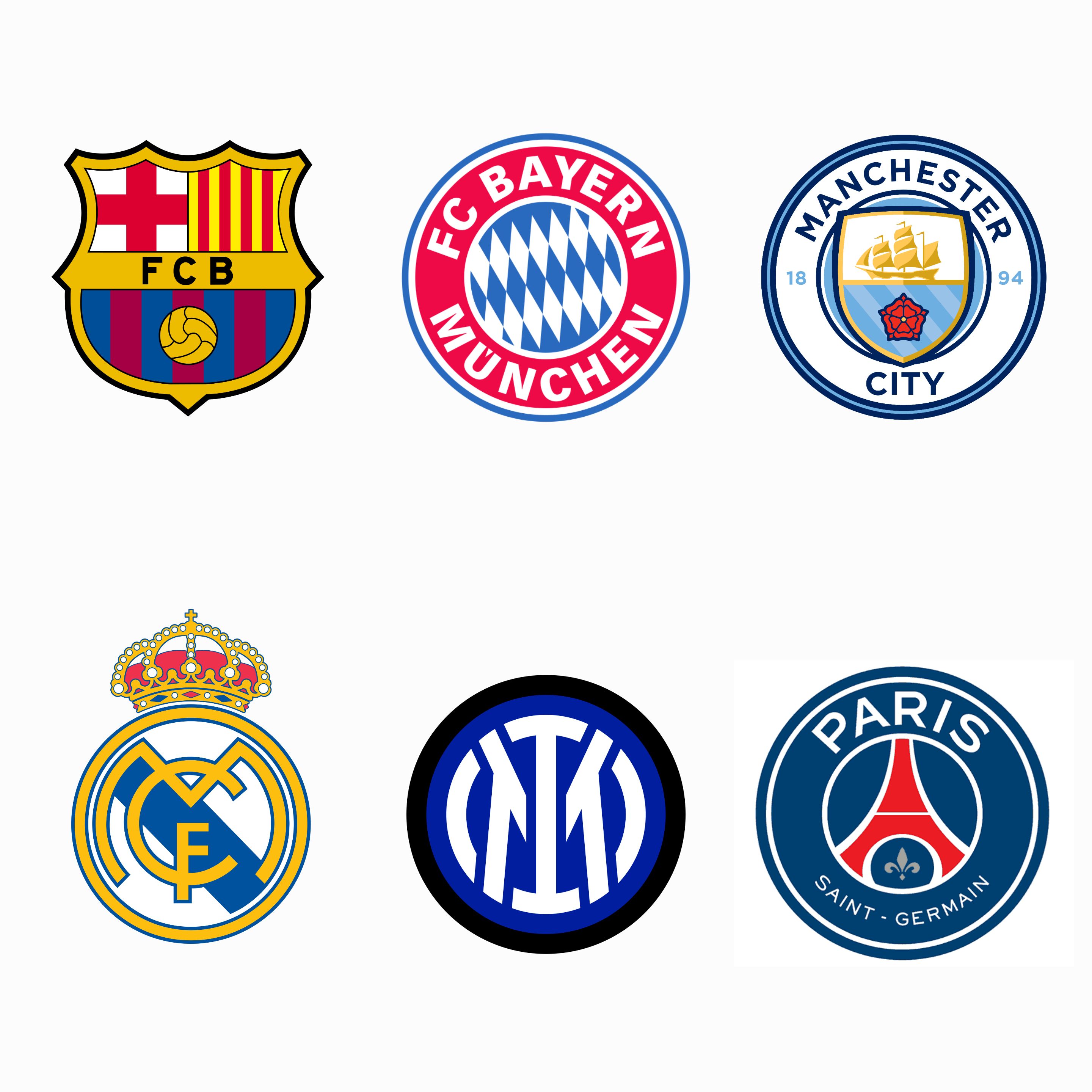
A soccer club consists of teams of players who come together to compete in the sport of soccer, also known as football in many parts of the world. Typically, a team consists of players with various positions such as forwards, midfielders, defenders, and a goalkeeper. They work together to score goals while preventing the opposing team from scoring. Teams often represent cities, regions, or countries in various leagues, tournaments, and competitions. The teamwork, strategy, and coordination among players are essential for success on the field. These clubs can vary in size, structure, and level of competition. They often have youth academies, amateur teams, and professional teams that compete in different leagues and tournaments. From top left to bottom right are some prominent teams: Barcelona, Bayern Munich, Manchester City, Real Madrid, Inter Milan, and PSG.
Soccer players are athletes who compete in the sport of soccer, also known as football in many countries. They exhibit exceptional physical fitness, technical skills, and tactical understanding of the game. These players specialize in various positions on the field, such as forwards, midfielders, defenders, and goalkeepers, each with unique roles and responsibilities. Soccer players undergo rigorous training to improve their agility, speed, ball control, and decision-making abilities. Many become renowned for their talent, earning global recognition and often playing for prestigious clubs or national teams. The best players often possess a combination of skill, vision, creativity, and teamwork, influencing the outcome of matches and leaving a lasting impact on the sport's history. From top left to bottom right are some of these better and more famous players: Lionel Messi, Cristiano Ronaldo, Kylian Mbappe, and Erling Halland.
Club soccer competitions refer to tournaments organized for professional soccer clubs to compete against each other. These competitions occur at various levels, from domestic cups within a country to continental and global tournaments. Domestic: these tournaments run parallel to the league seasons within respective countries. Examples include the FA Cup in England, Copa del Rey in Spain, DFB-Pokal in Germany, and Coppa Italia in Italy. Clubs from various tiers within a country's football structure compete for a national cup title. Contiential: these involve clubs from different countries within a continent, such as Europe. The most major tournament on the club level is the Europe continetal tournament the UCL, featuring top-tier teams from across Europe. The tournament involves a group stage followed by knockout rounds. Teams compete for the coveted Champions League title by showcasing their skill, strategy, and teamwork. The final match determines the champion of Europe.